


Institutions are tested in times of crisis. For South Sudan’s mine action sector, ongoing conflicts over the past two decades have disrupted operations, displaced communities, and placed renewed strain on national systems. Amid these challenges, the need for a strong, nationally led mine action authority became even more urgent.
In 2006, the National Mine Action Authority (NMAA) was formally established by Presidential Decree as the national body mandated to coordinate and regulate mine action activities. At the time, South Sudan was still part of Sudan, and national systems were in their formative stages. The decree marked a critical step toward institutionalizing national ownership in a sector heavily supported by international partners.
Through the project “Capacity Enhancement of the National Mine Action Authority for Effective Coordination of Mine Action in South Sudan - 2025-2026” implemented by UNMAS South Sudan with financial support from the Embassy of Japan under the Japan Supplementary Budget (JSB), efforts are focused on strengthening the institutional backbone of the National Mine Action Authority (NMAA) to ensure long-term sustainability and national ownership.
At the center of this story is Deng Kuer, now Director of Operations at NMAA.
Growing with the Institution
Deng joined the national mine action institution in 2007, during its early consolidation phase. The Directorate of Demining Authority, originally established in 2004, was evolving into a more structured national framework under the NMAA.
He began as Private Secretary to the Chairperson, observing closely how policy direction, operational tasking, and coordination with implementing partners were managed at the national level.
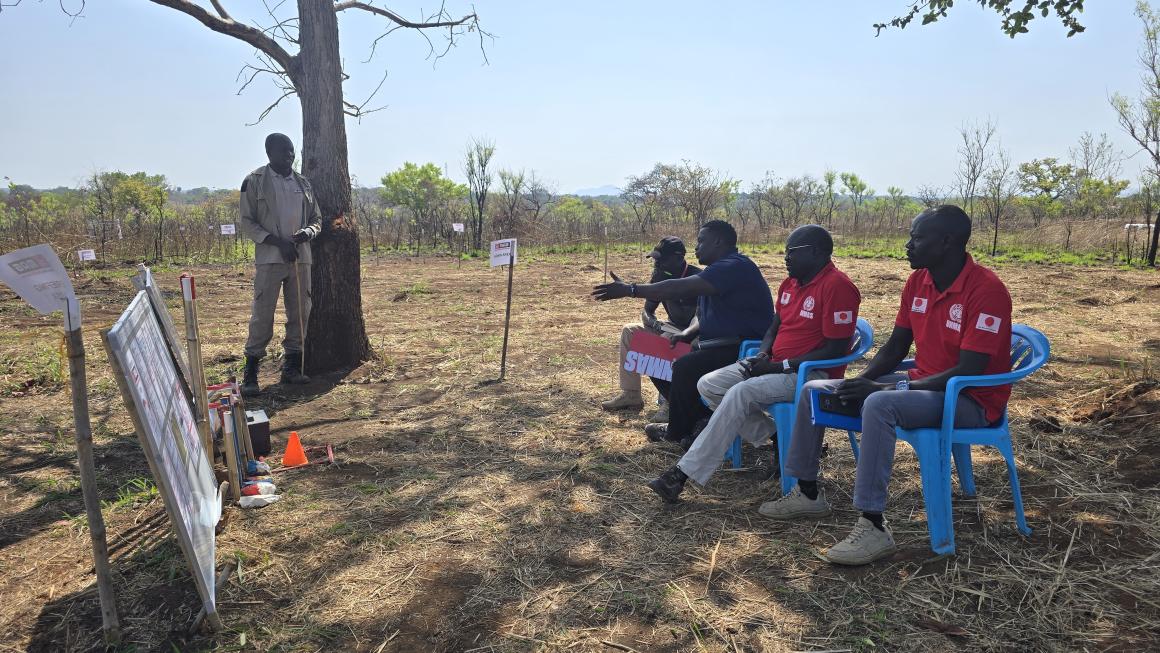
Determined to better understand the technical realities of mine action, he pursued hands-on learning in demining. Moving from the office to the field gave Deng direct exposure to the risks and hands-on work faced daily by clearance teams.
When conflict erupted in 2013 and again in 2016, mine action operations were heavily affected. Access constraints, insecurity, and shifting priorities tested both implementing partners and national coordination mechanisms. For Deng, those years highlighted a critical lesson: without strong national institutions, progress can quickly stall.
“We saw how fragile systems can be during conflict,” he reflects. “It became clear that strengthening the Authority itself is essential for sustainability.”
Investing in Skills, Building Sustainability
Over the years, Deng strengthened his technical and managerial expertise through advanced humanitarian demining training, Explosive Ordnance Disposal (EOD) Level 3 certification, and project planning and management courses. He also benefited from capacity-building initiatives supported by UNMAS, the Government of Japan, and partners including the Norwegian People's Aid (NPA), the Mines Advisory Group (MAG) and the Geneva International Centre for Humanitarian Demining (GICHD).
Under the current Japan-supported project, this professional development has been consolidated into a structured approach to strengthening operational coordination within NMAA. Deng participated in South - South peer learning exchanges with the Cambodia Mine Action Centre (CMAC), gaining insights into how nationally led programmes evolve from heavy international support to sustainable national management.
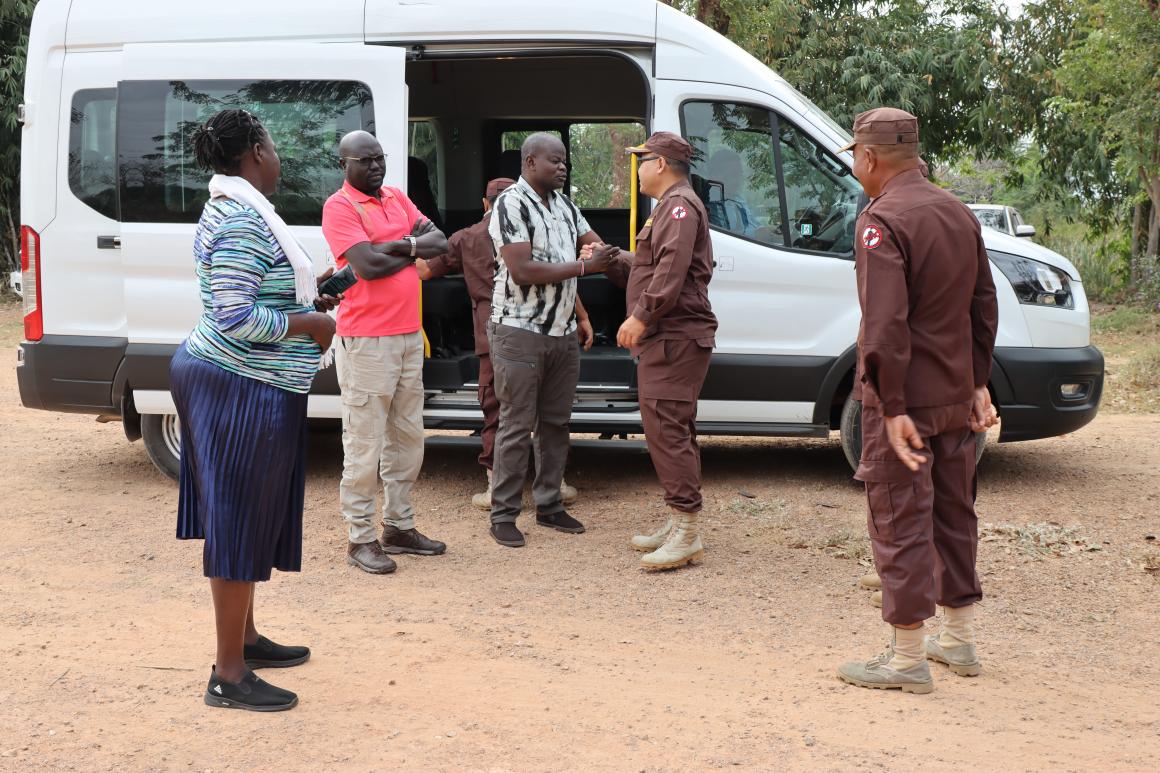
He also engaged in joint on-site quality assurance visits with the UNMAS technical team, refining his capacity to oversee compliance with national and international standards and to provide constructive guidance to implementing partners.
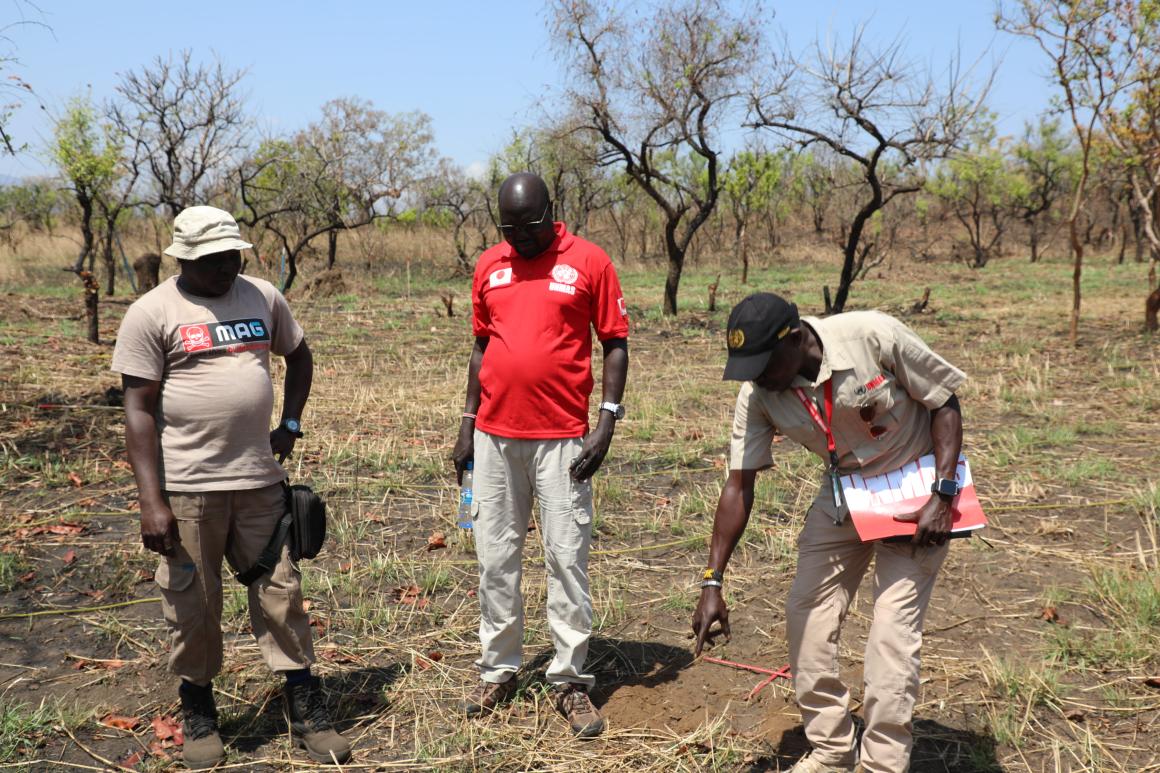
Today, as Director of Operations, Deng plays a central role in tasking, oversight, quality assurance, and reporting. His ability to produce operational reports and contribute to strategic planning processes strengthens transparency and reinforces the NMAA’s leadership role.
National Ownership in Practice
Strengthening national ownership is not an abstract concept. It means ensuring that South Sudan has professionals capable of coordinating mine action safely and effectively, even in times of uncertainty. It means building systems that can withstand political and security shocks. And it means transitioning from dependency toward sustainability.
UNMAS South Sudan’s support to NMAA focuses precisely on these pillars; capacity development, mentorship, institutional strengthening, and exposure to global best practices. The Government of Japan’s investment recognizes that clearing land is only one part of the equation; building institutions is what ensures lasting impact.
Deng’s journey, from Private Secretary in the early years of his service, to trained deminer, to Director of Operations, mirrors the resilience of South Sudan’s mine action sector itself. His growth reflects a deliberate effort to empower national professionals who can lead coordination and safeguard progress.
“When we build our own capacity,” Deng says, “we protect not only communities from explosive hazards, but the future of our programme.”
As South Sudan continues its path toward peace and development, strengthening the NMAA ensures that mine action remains nationally owned, sustainably managed, and firmly anchored in the country’s long-term recovery.


