

Geneva’s standing as a global hub for humanitarian organizations makes it an ideal base for UNMAS outreach. UNMAS works with a broad set of partners based in Europe and beyond to protect people living in humanitarian emergencies from the risk of explosive ordnance. and realize the rights of victims.
It represents UNMAS in key humanitarian, human rights, peace, disarmament events and treaty meetings. In addition, it builds partnerships with Member States and international organizations to mitigate the risk of explosive ordnance. Every year, UNMAS organizes the biggest mine action convention in the world, the International Meeting of Mine Action National Directors and United Nations Advisers (NDM-UN) in partnership with the Geneva International Centre for Humanitarian Demining (GICHD).
From Syria to Sudan, from Ethiopia to Afghanistan, from Ukraine to Colombia, the needs for explosive ordnance risk education (EORE) are immense, and unfortunately only growing as the threat from anti-personnel mines and explosive remnants of war continues to spread.
Humanitarian Coordination
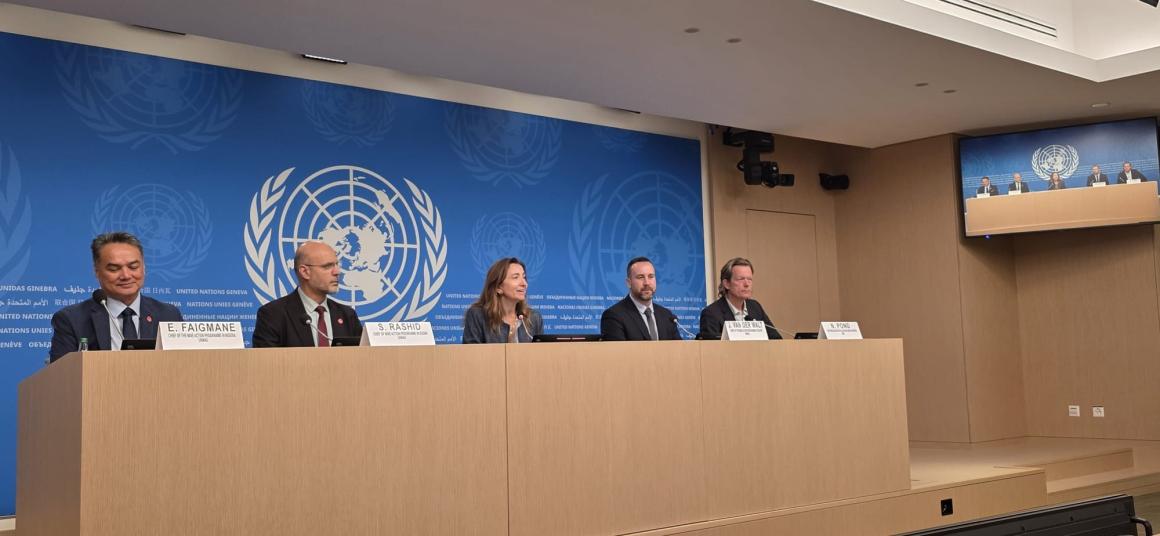
The Geneva Office represents UNMAS in the OCHA-led Global Cluster Coordination Group (GCCG), Global Protection Cluster Strategic Advisory Group (SAG) and Operations Cell. The office also provide technical and policy advice to UNMAS country programmes on humanitarian response planning and coordination in collaboration with the Programme Planning and Management Section. Particular attention is given to the integration of UNMAS country components into local Protection Clusters, and of mine action proposals into humanitarian appeals by increasing partnerships with Geneva-based stakeholders.
UNMAS Geneva Office promotes the integration of mine action into humanitarian operations and policies. In line with the Inter-Agency Standing Committee Policy on Protection in Humanitarian Action, UNMAS is the lead entity on mine action within the Global Protection Cluster. The GPC is a network of UN agencies and NGOs collaborating to protect people from violence, coercion, or deprivation in humanitarian crises.
UNMAS, through the GPC, and in-country mine action coordinators work with national and international organizations to assess risks, protect affected communities, and advocate for mine action in humanitarian contexts. In-country coordinators host the primary coordination platform for coherent mine action response in humanitarian crises settings, bringing together NGOs and UN agencies under the shared objective of more predictable and effective humanitarian mine action and protection in emergencies.
In 2025, coordinators were actively integrating mine action into the Humanitarian Needs and Response Plans in 15 complex settings. Through the GPC, UNMAS routinely collaborates with UN (FAO, IOM, UNDP, UNICEF, UNHCR, WHO) and non-UN organizations (DCA, DRC, FSD, GICHD, HALO Trust, HI, ICRC, FSD, MAG, NPA) to mainstream mine action in humanitarian responses. For example, UNMAS contributed to a policy guidance on “Nexus Approaches in Humanitarian Settings” and a “Joint Operational Framework” with the Global Health Cluster, convened a technical workshop on service mapping and referrals for explosive ordnance victims and persons with disabilities, and continue to collaborate with researchers on blast trauma care.
Mine action is an important enabler of humanitarian, development, peace and human rights objectives. This is why UN entities integrate explosive ordnance considerations in the assessments, plans, and budgets of projects and programmes wherever contamination may undermine or inhibit the delivery of a mandated UN Mission, Agency, Fund or Programme activity. This ensures that UN support to host government, transitional authorities, peacekeeping missions and other entities can be delivered in a secure, cost-efficient, coordinated, and effective manner.
Advocacy for International Humanitarian Law
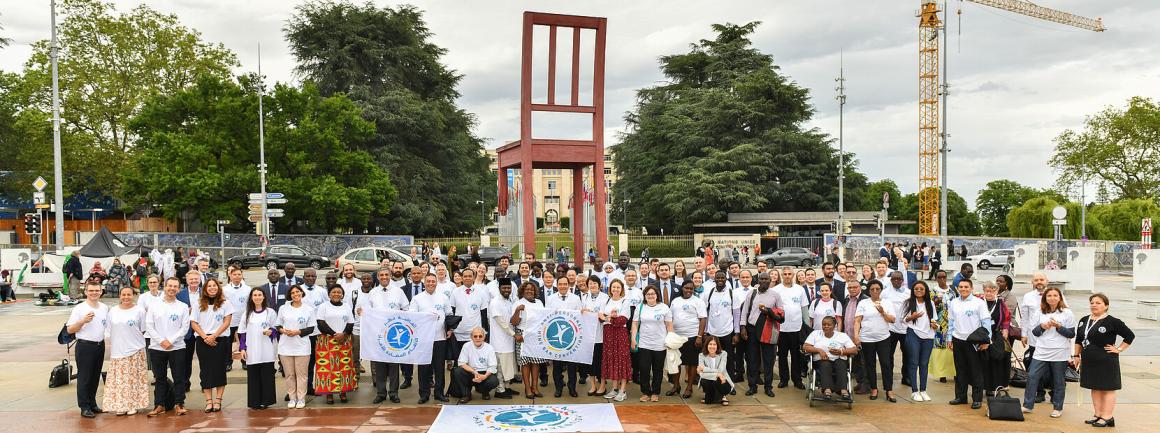
Geneva is the global centre for humanitarian disarmament. It is the place where states negotiate, review, and implement norms that limit weapons with unacceptable humanitarian impact. The Anti-Personnel Mine Ban Convention (APMBC), the Convention on Cluster Munitions (CCM), and the Convention on Certain Conventional Weapons (CCW) form a normative framework that bans or restricts certain weapons and establishes rules for how states must address their humanitarian impact. UNMAS Geneva office coordinates UN activities to support the implementation and the universalization of these treaties. It also advocates for the implementation of the Convention on the Rights of Persons with Disabilities (CRPD) to realize the rights of explosive ordnance victims.
The office facilitates the preparation of UN statements to present at these treaties through the Inter-Agency Coordination Group on Mine Action (IACG-MA), whose members include:
- UN Department of Peace Operations/UNMAS (Chair)
- Food and Agriculture Organization (FAO)
- UN Development Programme (UNDP)
- Office of the UN High Commissioner for Refugees (UNHCR)
- UN Children’s Fund (UNICEF)
- UN Office for the Coordination of Humanitarian Affairs (OCHA)
- UN Office of Disarmament Affairs (UNODA)
- UN Office of the High Commissioner for Human Rights (OHCHR)
- UN Office for Project Services (UNOPS)
- UN Entity for Gender Equality and the Empowerment of Women (UN Women)
- World Food Programme (WFP)
- World Health Organization (WHO)
- United Nations Institute for Disarmament Research (UNIDIR)
- *World Bank* *Observer status
The three mine action treaties require states to take action in clearance, victim assistance, risk education, international cooperation and assistance as well as transparency and reporting. UNMAS Geneva provides support to visiting delegations, technical guidance, and an objective perspective on progress by member states in meeting their obligations.
We must reject the notion that respect for international humanitarian law can be subordinated to security or defense considerations. Such reasoning strikes at the very purpose of these rules, to reduce human suffering exactly when conflict breaks out, including in the most challenging and exceptional of circumstances.
An Ideal Place for Mine Action Professionals to Meet
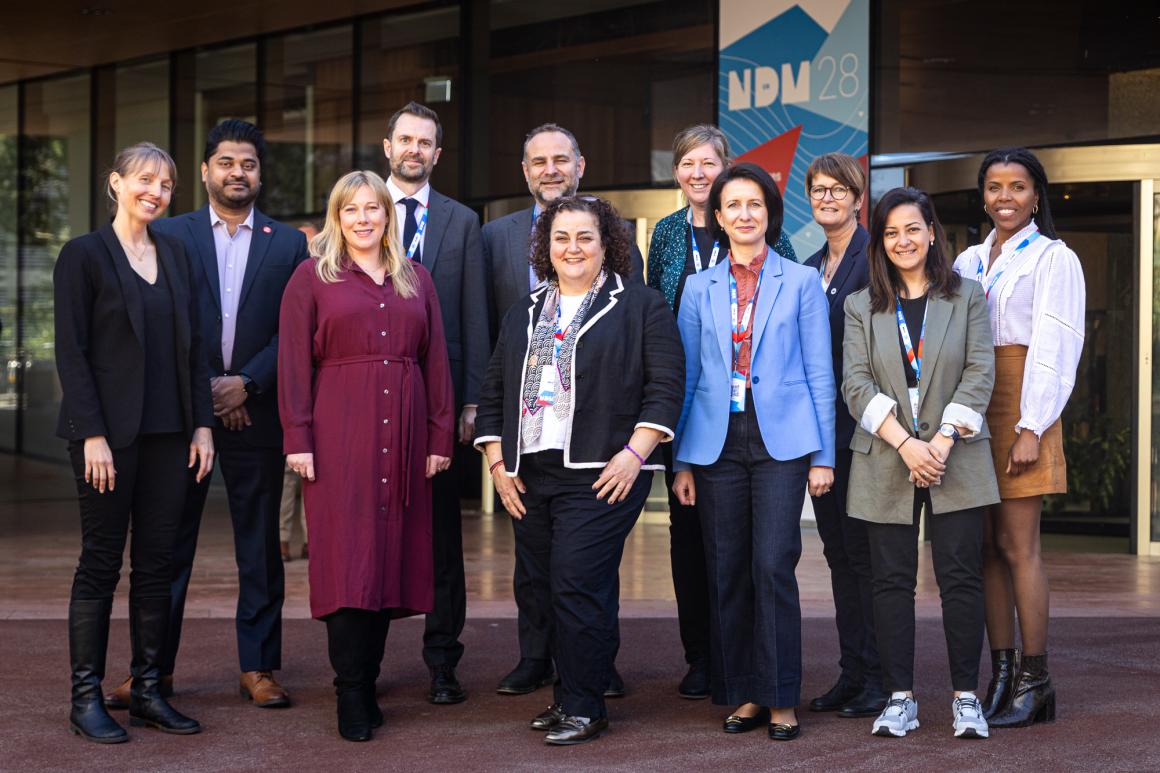
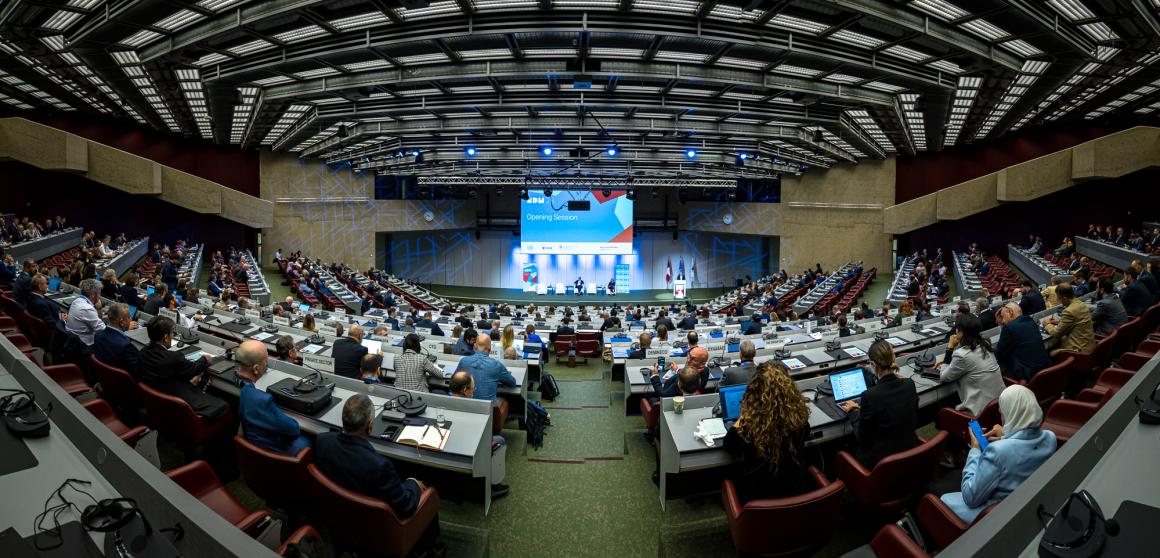
With support from Switzerland, the Geneva office also co-convenes the annual International Meeting of Mine Action National Directors and United Nations Advisers (NDM-UN) with the Geneva International Centre for Humanitarian Demining (GICHD). NDM-UN is the sector’s leading annual gathering, bringing together directors of national mine action authforities and professionals from across the global mine action community, including donors, UN entities, NGOs, the private sector, and academia. The event provides an opportunity for mine action leaders to meet in-person for three days to exchange and network on pressing issues faced by the mine action sector.
Resources
Protection Risk 10 - Presence of Mines and other Explosive Ordnance
International Meeting of Mine Action National Directors & UN Advisers
Related Links: