

Mission and Mandate
Improvised Explosive Device (IED) Threat Mitigation Advisory Team (TMAT) strengthens the preparedness and performance of Troop and Police Contributing Countries (T/PCCs) for peacekeeping and special political missions through Explosive Ordnance Disposal (EOD) and Improvised Explosive Device (IED) doctrinal expertise, training, mentoring, and technical support.
• Works with the Integrated Training Service (ITS), Office of Military Affairs (OMA), and bilateral and regional partners to enhance T/PCC capabilities across peacekeeping and special political missions
• Provides tailored operational and doctrinal support to enhance mission effectiveness
• Based at the UN Regional Service Centre Entebbe; the Mobile Training Team (MTT) engages directly with client missions, T/PCCs, and Member States in support of UN priorities on protection, safety, security, performance, accountability, and sustaining peace
What is an IED?
An Improvised Explosive Device (IED) is “a device placed or fabricated in an improvised manner incorporating destructive, lethal, noxious, pyrotechnic, or incendiary chemicals and designed to destroy, incapacitate, harass, or distract. It may incorporate military stores but is normally devised from non-military components.” IEDs fall within the scope of the Convention on the prohibition of the use, stockpiling, production, and transfer of anti-personnel mines and on their destruction, if and when they constitute anti-personnel mines as per the definition in Article 2 /1.
Training Results (2021-2025)
- 49 Total Trainings Delivered
- 974 Course Participants
- 58 Member State Beneficiaries
- 6 Peacekeeping Missions Supported
- 18 Updated & Published Curricula, Guides, Manuals
- 17 African Member States Supported – UN TPP
Training Reach & Impact (2021-2025)
- 361 instructors certified
- 320 peacekeepers briefed on IED threat
- 58 beneficiary Member States
21 host Member States
Key Regional Partnerships
Support UN-AU partnership initiatives, in 2025 responded to a request from the African Union, through UNOAU to conduct a C-IED assessment of the Multinational Joint Task Force (MNJTF) in N’Djamena, Chad. This reflects TMAT’s ongoing commitment to enhancing regional readiness in line with broader UN-AU strategic objectives.
Support ASEAN Member States to strengthen national C-IED instructor capacity through provision of EHAT and IED-TM ToT courses.
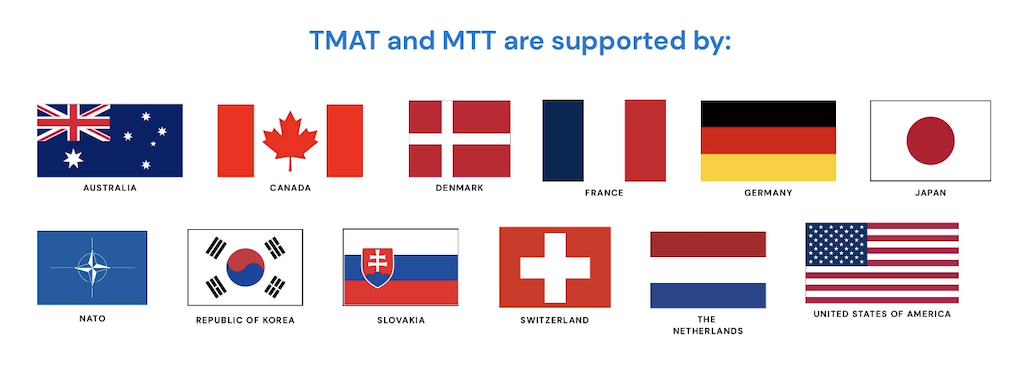
Through partnership with NATO Defence Capacity Building (DCB) Initiative, and coordination with other key bilateral partners including Australia, France, Germany, Kenya, the Netherlands, the UK, & USA, TMAT harmonised training provided to T/PCCs.
Recognized Training Centres & Global Cooperation
TMAT supports the formal recognition of C-IED training institutions to strengthen quality assurance and interoperability across Member States. Recognitions are coordinated with DPO-OMA and ITS and aligned with UN Peacekeeping Resource Hub standards.
- IPSTC (Kenya): C-IED courses recognized by the UN Integrated Training Service (ITS)
- TMAT also supported IPSTC in establishing its own Mobile Training Team, which has trained over 200 personnel showcasing a strong model of South-South cooperation.
- CSIAP-GEN (Cameroon): EHAT course recognized — first Francophone centre.
- Completed in 2025: Pakistan Centre of International Peace and Stability (CIPS) and Tunisia C-IED Centre of Excellence (TC2E).
Resources
- Military and Police Units on Improvised Explosive Device (IED) Threat Mitigation Course
- United Nations Explosive Hazard Awareness Training (EHAT)
- United Nations All Arms Search Course (AASC)
- United Nations Improvised Explosive Device Threat Mitigation Handbook