


Testimony from Amélia Sobola Luandima, Lawyer and Marking Expert, National Commission for the Control of Small Arms and Light Weapons (CNC-ALPC), Central Logistics Base of the Democratic Republic of the Congo (DRC) in Kinshasa.
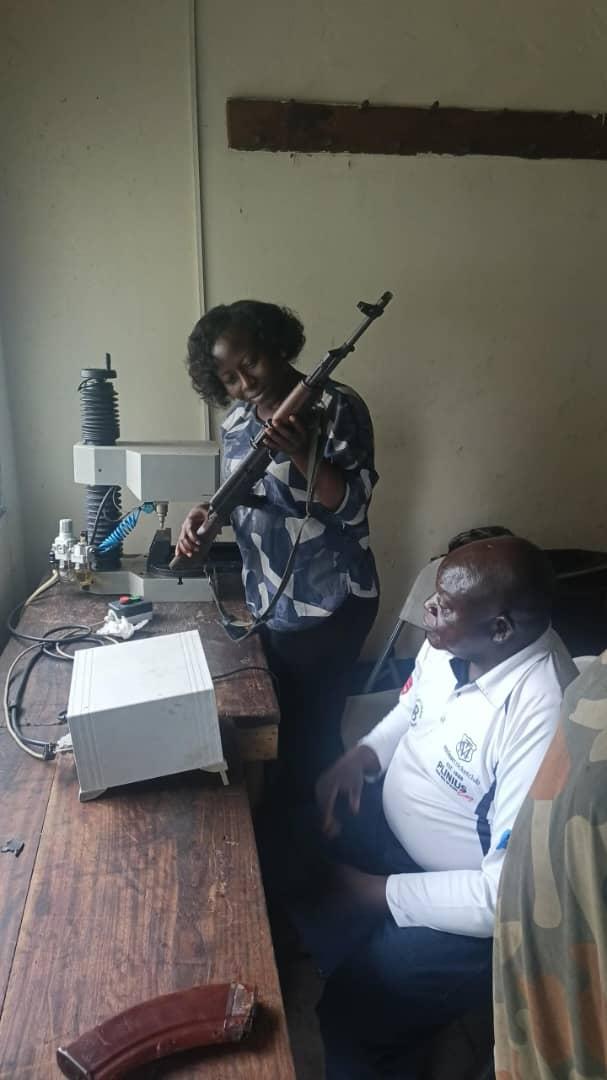
Since 2024, I have been working in the field of weapons marking - a crucial role in strengthening justice, security, and the traceability of weapons in the Democratic Republic of the Congo.
Every day, I help secure these weapons so that each one has a unique identity. During operations, I am involved in every step: identification, operating the marking machine, and handling the controller. These activities improve the traceability of weapons that are recovered, collected, seized by the justice system, or removed during cordon-and-search operations. They directly contribute to reducing the illicit proliferation of small arms and light weapons (#SALW), strengthening the rule of law, and creating a safer environment for women, girls, and our communities as a whole.
For me, this is what justice in action looks like.
As a lawyer by training, working for the National Commission for Small Arms and Light Weapons’ control (#CNC-ALPC) [National entity responsible for the implementation of the national policy on SALW control and management] and assigned to the central logistics base of the FARDC, I was trained in weapons marking and have gradually come to love this profession. I am the only woman on my team, yet I have found my place. One of my greatest motivations has been taking on the challenge of handling weapons - something I never imagined possible as a civilian.
The involvement of women in combatting the proliferation of SALW brings an inclusive perspective, in line with Pillar 5 of the National Action Plan on SALW Control (NAP 2024-2028) developed with UNMAS support. Our presence in these spaces builds community trust, promotes transparency, and contributes to justice that is accessible to all.
On this International Women’s Day, I call on all women and girls: do not be afraid. Join us t in this work that protects our families, our communities, and our country. We all have a role to play in building a more just and safer future for all women and girls.
Testimony from Hortence Lubamba Mariame, Farmer and Avenue Chief of Burora, in Goma.
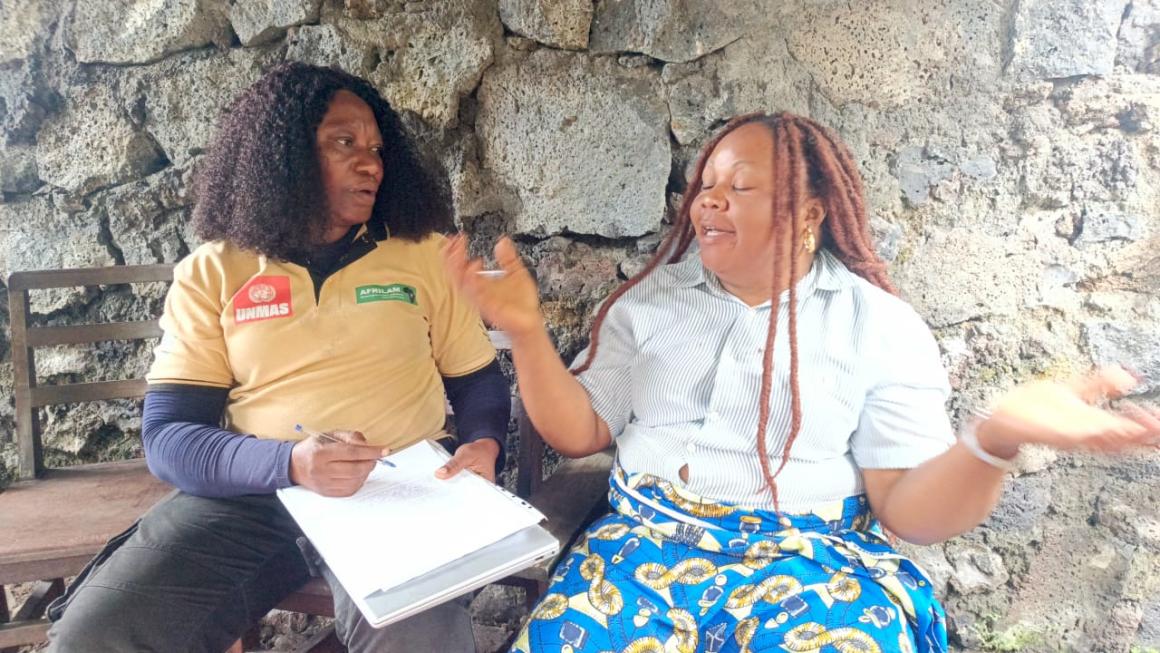
I have lived in Goma for 31 years, and as a mother, I was afraid to send my children to fetch water because of explosive ordnance. The risk education sessions conducted by UNMAS through AFRILAM have reassured us, as they teach us how to recognize explosive ordnance and understand their consequences. Since then, my children have changed their behavior: they no longer touch unknown objects and avoid areas marked "mine danger." I witnessed a fatal accident caused by an explosive ordnance, which deeply affected me.
Today, my main concern is that children receive more risk education and that mine action organizations continue their work to protect our communities… To all women living in contaminated areas: let us be courageous, follow the advice we have been given, and advocate together for the clearance of our land so we can resume our activities safely.


