
Julius Vanderwalt, Chief of Mine Action Programme in the Occupied Palestinian Territory
After two years of intensive fighting, and with explosive weapons deployed by all parties to the conflict, the scale of explosive ordnance contamination in Gaza is immense. Explosive ordnance is one of the most indiscriminate threats in any conflict, it does not distinguish between a humanitarian worker, a civilian, a soldier, a militant, a freedom fighter, a rebel, or any one of us. Its presence endangers everyone equally. In Gaza, this contamination is directly threatening communities and obstructing essential support to the Strip’s 2.1 million residents by restricting lifesaving humanitarian operations, slowing early recovery efforts, and making critical reconstruction extremely dangerous.
Harsh living conditions are forcing families into unsafe areas, dramatically increasing their exposure to explosive hazards. Children are among the most at risk, and people are being injured simply while collecting basic necessities like firewood. Many families have no choice but to shelter near areas suspected of containing explosive ordnance because safer alternatives do not exist.
At the same time, rising violence in the West Bank is increasing the risk of explosive ordnance contamination there as well. With explosive hazards present in densely populated refugee camps, urban centres, and rural areas alike, communities have to live side‑by‑side with deadly remnants of conflict.
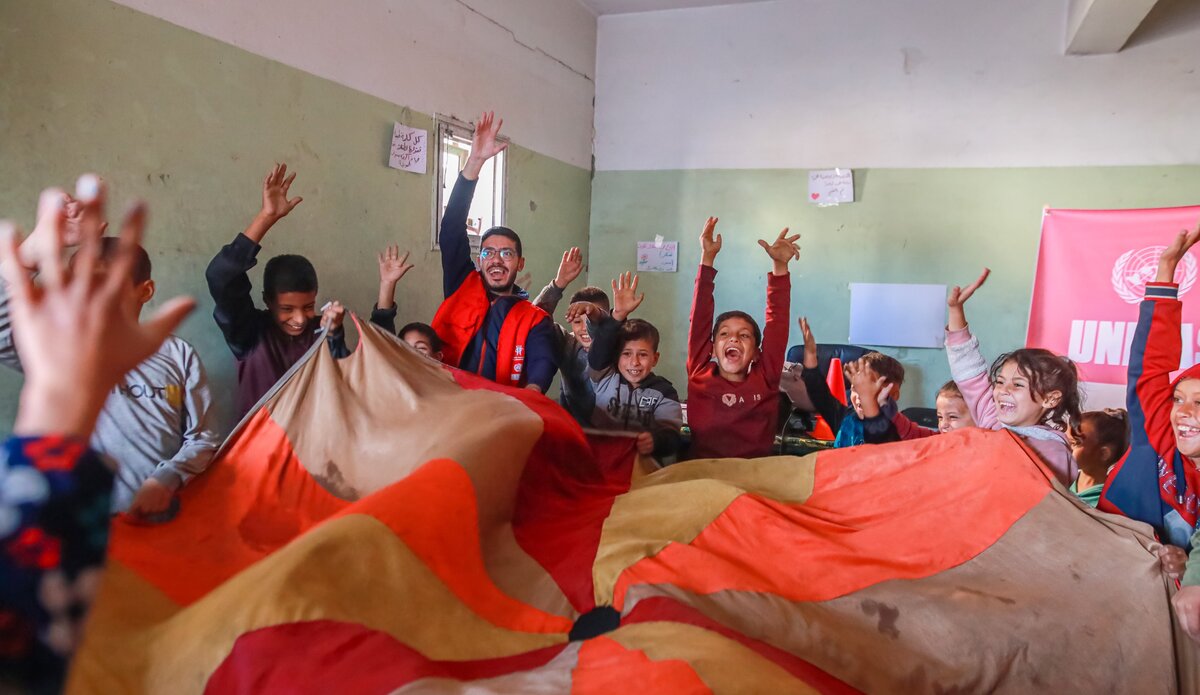
In Gaza, UNMAS works to reduce these risks by responding to reports of explosive threats and delivering lifesaving risk education. We enable humanitarian and early recovery efforts by advising partners on potential explosive hazards so they can deliver assistance more safely. This includes accompanying convoys, assessing critical sites, and ensuring that medical, shelter, and other essential services can reach conflict‑affected communities.
In the West Bank, we work closely with local partners, including the Palestinian Authority’s Mine Action Center and national NGOs, to support a coordinated, locally led mine action response and strengthen essential national capacities.
Since October 2023, UNMAS has accompanied more than 800 humanitarian missions across Gaza and conducted over 650 explosive hazard assessments of hospitals, schools, roads, shelters, and other vital infrastructure. Together with local partners, we have also delivered risk education to more than 450,000 people across all governorates.
With a ceasefire now in place, there is a glimmer of hope for Gaza’s recovery. This moment warrants an expanded and sustained mine action response to meet the needs of communities and support the massive reconstruction ahead. While challenges remain, any improvement in access and security offers an opportunity to scale up and diversify our activities to more comprehensively address the explosive threat.
Humanitarian mine action in the Occupied Palestinian Territory is one of the most neutral, life‑preserving interventions. It is not about anything else than saving lives, restoring dignity, and ensuring that safer ground becomes a lasting reality for every community in the region.